
Managing compliant marketing across multiple channels without risking regulatory violations slows approvals and adds manual review cycles. Many tools hide pricing behind sales calls or require enterprise licensing, which blocks smaller marketing and regulatory teams from fast procurement. This comparison shows features, integrations, and pricing so marketing, regulatory, and legal teams can pick a scanning platform that fits their workflow and budget.
Table of Contents
ScanCompliant
At a Glance
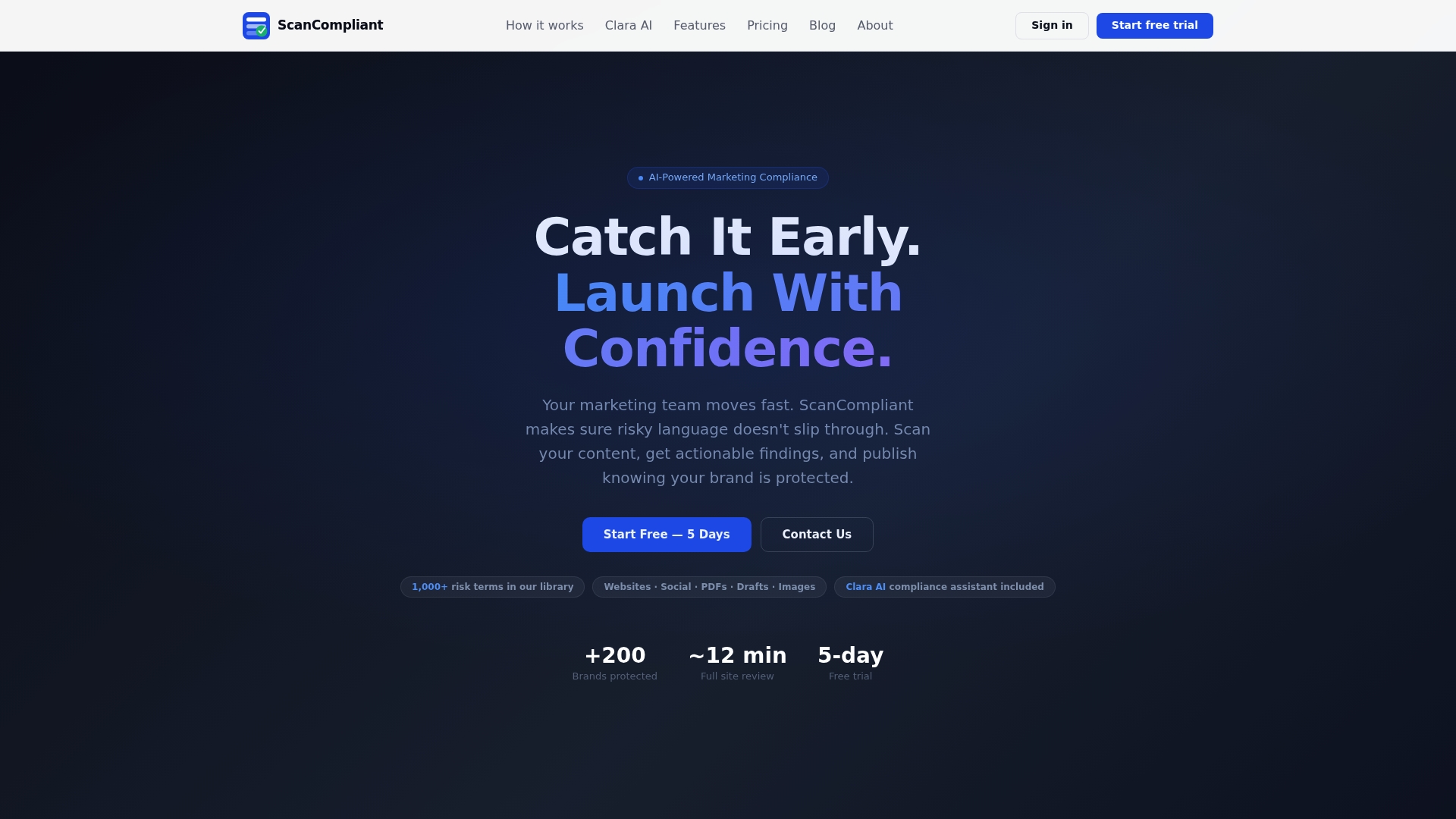
ScanCompliant reports a library of over 1,000 risk terms used to flag risky marketing language. The system scans websites, PDFs, images, and social posts for multichannel content and returns prioritized findings with exact flagged locations. Clara AI supplies plain English explanations and safer rewrite suggestions alongside each flag.
Core Features
The platform performs multichannel content scanning across web pages, social channels, documents, and images while mapping each issue to an exact location. It generates a prioritized findings report with risk ranking and provides a compliance review dashboard that tracks changes and creates an audit trail. Teams can add a custom keyword library and use Clara AI for on-the-spot explanations and rewrite recommendations.
Key Differentiator
Clara AI is the distinctive element. It does more than flag risky language. Clara AI explains why wording is risky and suggests alternative phrasing inside the same workflow. That combination of a large risk library and an in-platform rewrite assistant reduces back-and-forth between marketing and legal.
Pros
ScanCompliant automates review across multiple content channels, letting marketing and regulatory teams scan everything from landing pages to PDFs in one place. The platform surfaces prioritized findings with clear locations and explanations, which shortens review cycles and preserves a documented compliance trail. ScanCompliant also supports custom keyword libraries and role based access for team collaboration; the vendor states it has protected more than 200 brands, which speaks to real adoption.
Cons
- Amazon product scanning is listed as coming soon, so current coverage may not include marketplace listings.
Who It’s For
Marketing, regulatory, and legal teams at supplement, telehealth, and DTC wellness companies that publish claims across multiple channels will get the most value. Teams that already maintain compliance keyword lists will see faster signal to action. Smaller teams without internal compliance experience can still use Clara AI to translate legal guidance into safer marketing copy.
Unique Value Proposition
A prioritized findings report ranks risks and points to exact flagged locations for each piece of content. According to the company, the platform delivers those prioritized findings in minutes, which reduces review queuing and speeds approvals. That faster review cadence pairs with a recorded audit trail that helps justify edits to auditors and platform moderators.
Real World Use Case
A supplement brand scanned its website and social campaign and flagged several claims likely to attract FDA or FTC attention. Clara AI suggested safer wording and provided short explanations for each flag, which led the team to update copy before launch. Legal signed off faster because each change linked back to a documented finding.
Pricing
Pricing starts at $79/month for the Starter plan, with higher tiers for unlimited scans and enterprise features. The model uses subscription tiers, so teams pay more if they need large scale scanning or advanced enterprise controls.
Website: https://scancompliant.com
Saifr
At a Glance
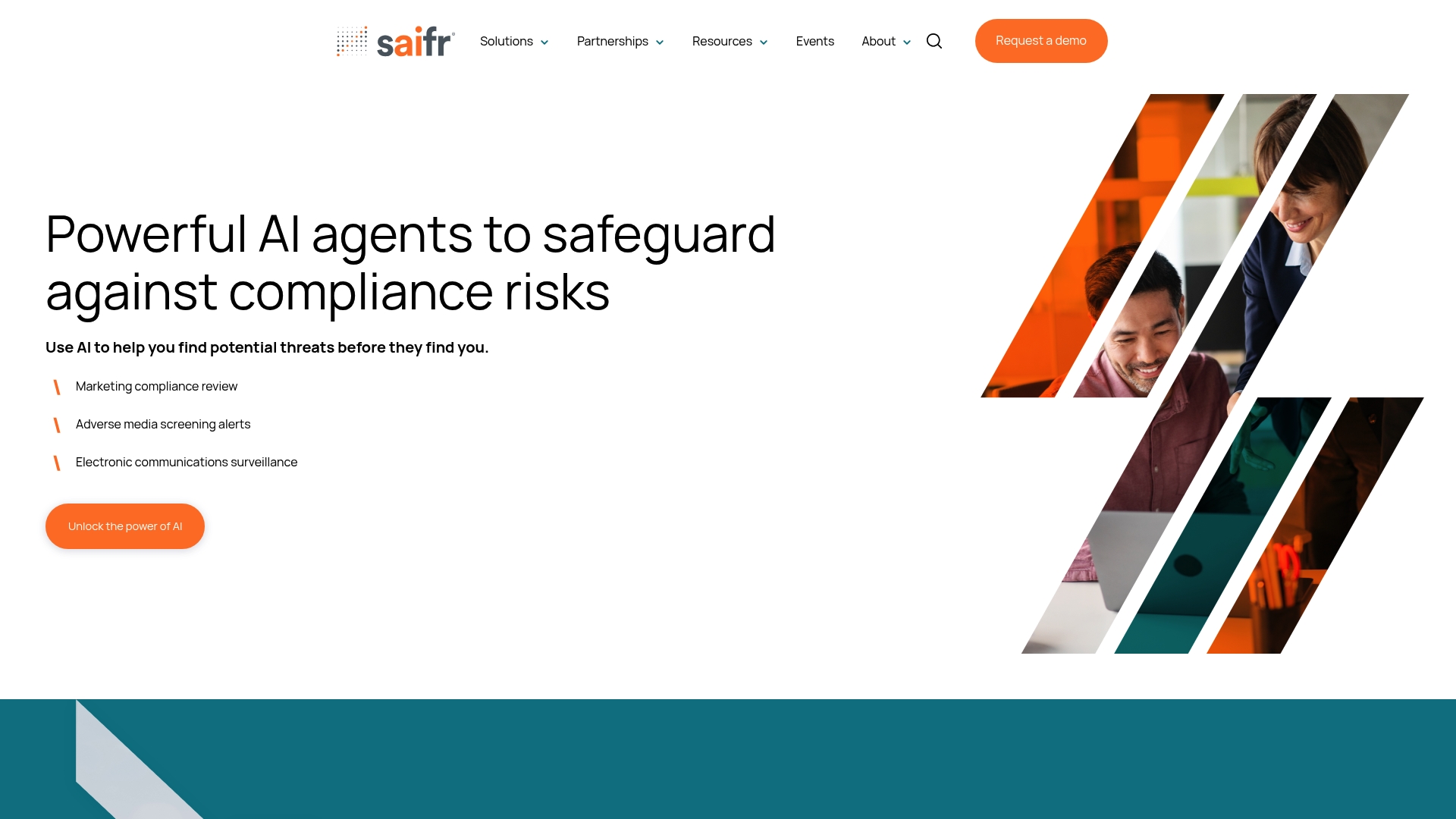
Saifr’s marketing materials state a reduction in review times of up to 10x, and the company positions that speed alongside AI risk detection. The platform targets financial services compliance and marketing workflows, so reviewers can flag risky language and sanctions hits earlier in the content lifecycle. The vendor also emphasizes ethics and transparency in its model training.
Core Features
Saifr combines AI-powered compliance review for marketing and communications with adverse media screening and sanctions monitoring. The product also offers electronic communications surveillance across multiple channels and formats and provides real-time risk detection with recommendations that fit content creation and review workflows. Enterprise integration options and API access connect those features into existing compliance stacks.
Key Differentiator
Saifr centers on AI models trained on proprietary, synthetic, and industry-specific data that are reviewed by subject-matter experts to reduce bias and improve relevance. That review layer is the stated reason the vendor gives for fewer false positives in finance-focused use cases. The approach prioritizes domain-specific signals over generic classification alone.
Pros
Saifr presents strong enterprise integrations with platforms such as Microsoft Azure and ServiceNow, which helps fold risk signals into ticketing and identity stacks. The vendor cites industry awards and client testimonials, so there is marketing evidence of customer success. Licensing flexibility with per-user and enterprise models plus API access supports both centralized compliance teams and distributed marketing groups.
Cons
-
Pricing is typically quoted on request, which can slow procurement and hide total cost until later conversations.
-
Implementation complexity may require dedicated onboarding and staff training for compliance and marketing teams.
-
Some scenarios still need human judgment for final compliance decisions, so automated flags do not replace legal sign-off in every case.
When It May Not Fit
Organizations that need out-of-the-box pricing and fast procurement may find Saifr a poor match because the offering prefers custom engagements. Small teams without capacity for onboarding or without enterprise systems may struggle to realize the vendor’s integration benefits. Use cases that demand absolute human verification for every decision will not benefit from the platform’s automated triage.
Notable Integrations
-
Microsoft Azure
-
ServiceNow
-
Adobe
-
Superhuman
Who It’s For
Regulatory compliance teams, legal departments, marketing and communications professionals in financial services will get the most from Saifr. Risk managers and enterprise compliance officers who operate inside regulated finance environments will benefit from industry-specific models and platform integrations. Teams with existing enterprise tooling are the best fit.
Real World Use Case
A financial services firm integrated Saifr into its marketing and compliance workflows and reported a dramatic speed improvement in review cycles. That figure supports faster approvals and earlier detection of sanctions or adverse media hits, reducing manual queue time for compliance reviewers. The integration forwarded flagged items into the firm’s ticketing system for action.
Pricing
License pricing is available per user or enterprise, and the company offers API access as part of customizable engagements. Exact costs require a conversation with Sales to capture scope, integrations, and onboarding needs.
Website: https://saifr.ai
Hellowarrant
At a Glance
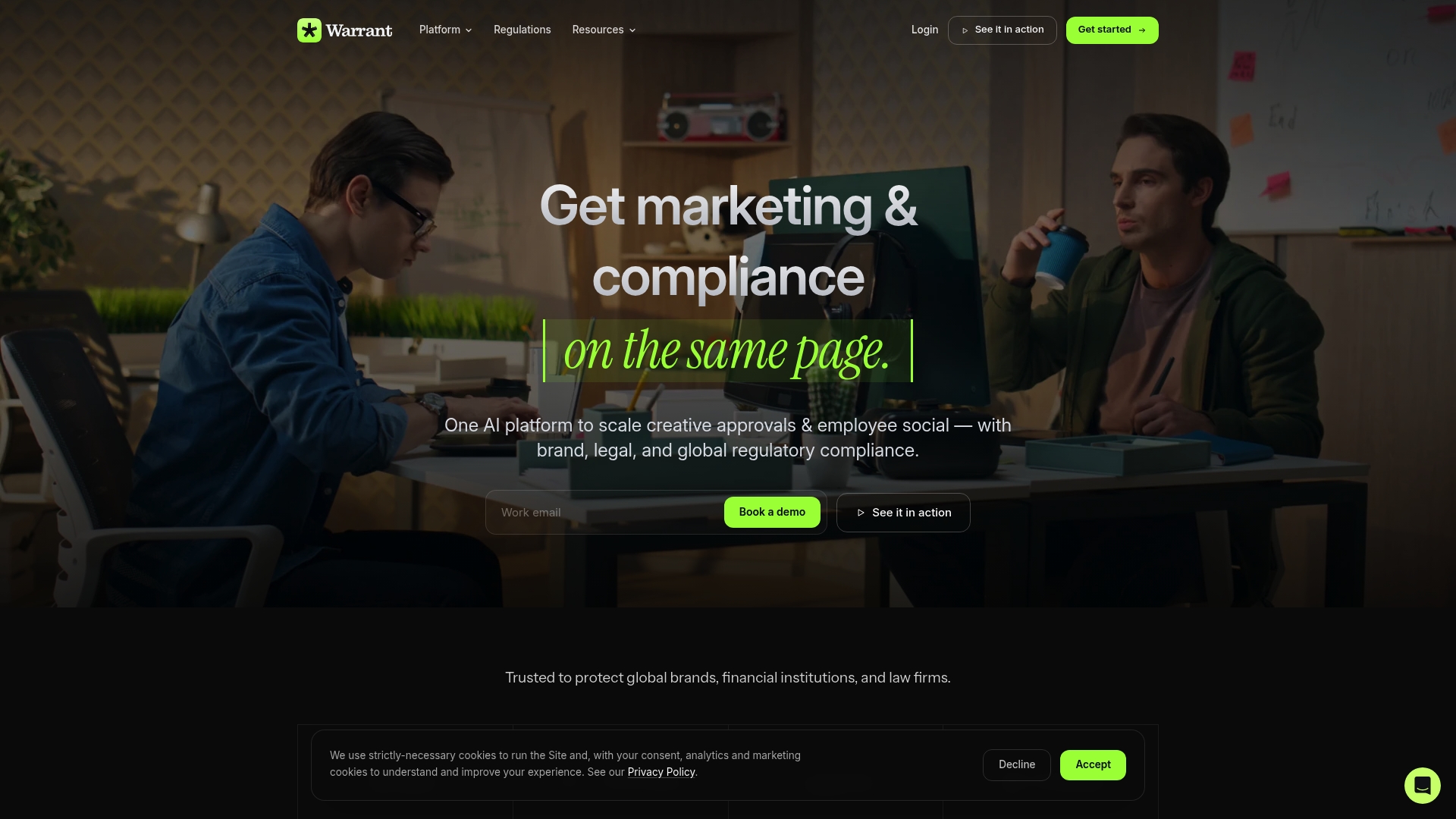
Hellowarrant reports up to 80% faster compliant marketing deployment. That figure highlights the platform’s claim that automation can shorten approval cycles for regulated campaigns. The product pairs AI checks with digital asset management and multi-stage review workflows aimed at legal and marketing teams.
Core Features
Hellowarrant combines AI-driven compliance pre-checks with unified review and approval workflows that support multi-stage routing and version history. The platform includes digital asset management with OCR search, exact-match disclosure libraries for legal verification, and regulatory monitoring that tracks rules across countries and states. These capabilities focus on keeping creative assets and disclosures aligned with regulatory requirements while preserving an audit trail.
Key Differentiator
The standout feature is in-workflow compliance feedback that flags risky language as teams create or route assets. Hellowarrant tightly integrates real-time checks inside creative and approval steps and supplies a unified audit trail for every change. That combination targets teams that want enforcement inside daily marketing tools rather than as a separate post-review step.
Pros
Automation speeds approvals and reduces busywork for review teams. That claim from the vendor frames how AI pre-checks and routing cut repetitive manual tasks, freeing legal reviewers to focus on high-risk items. The platform supports cross-jurisdiction monitoring and exact-match disclosure libraries, which helps when campaigns must follow different rules by state or country. Collaboration features include version control and an audit history that records reviewer decisions and asset changes. Integrations with common marketing systems reduce friction for deployment.
Cons
- Reliance on AI can produce false flags or miss regulatory nuance. This requires human oversight.
- Multi-regulator complexity means teams will need dedicated training to tune workflows and rules.
- Pricing details are limited, pointing to an enterprise licensing model that may not suit small teams.
When It May Not Fit
Teams with minimal compliance needs or single-jurisdiction campaigns may find Hellowarrant overly complex. Small marketing groups without a legal reviewer may not get full value until they invest in setup and workflow training. The product does not replace detailed legal review for highly nuanced or novel regulatory questions.
Notable Integrations
Hellowarrant connects with common marketing and collaboration tools, including Google Drive, HubSpot, Jira, Asana, Zapier, Webflow, and WordPress. These connections let teams import assets, post-approval, and trigger downstream workflows without manual file moves.
Who It’s For
Regulated marketing and compliance teams in financial services, healthcare, insurance, and legal firms that need faster approvals while keeping compliance visible and auditable. The platform suits organizations that operate across multiple jurisdictions and require a single record of reviewer decisions.
Real World Use Case
According to the company, a financial institution used Hellowarrant to pre-approve advertising drafts, automate disclosure checks, and monitor federal and state rules, cutting marketing review cycles from weeks to days. That reported outcome illustrates how the platform routes drafts, applies disclosure libraries, and logs reviewer signoffs.
Pricing
Pricing is not publicly listed. The vendor positions Hellowarrant for enterprise licensing, with costs likely tied to deployment scope, regulatory coverage, and support. Prospective buyers should request a demo and a tailored quote.
Website: https://hellowarrant.com
Aithena
At a Glance
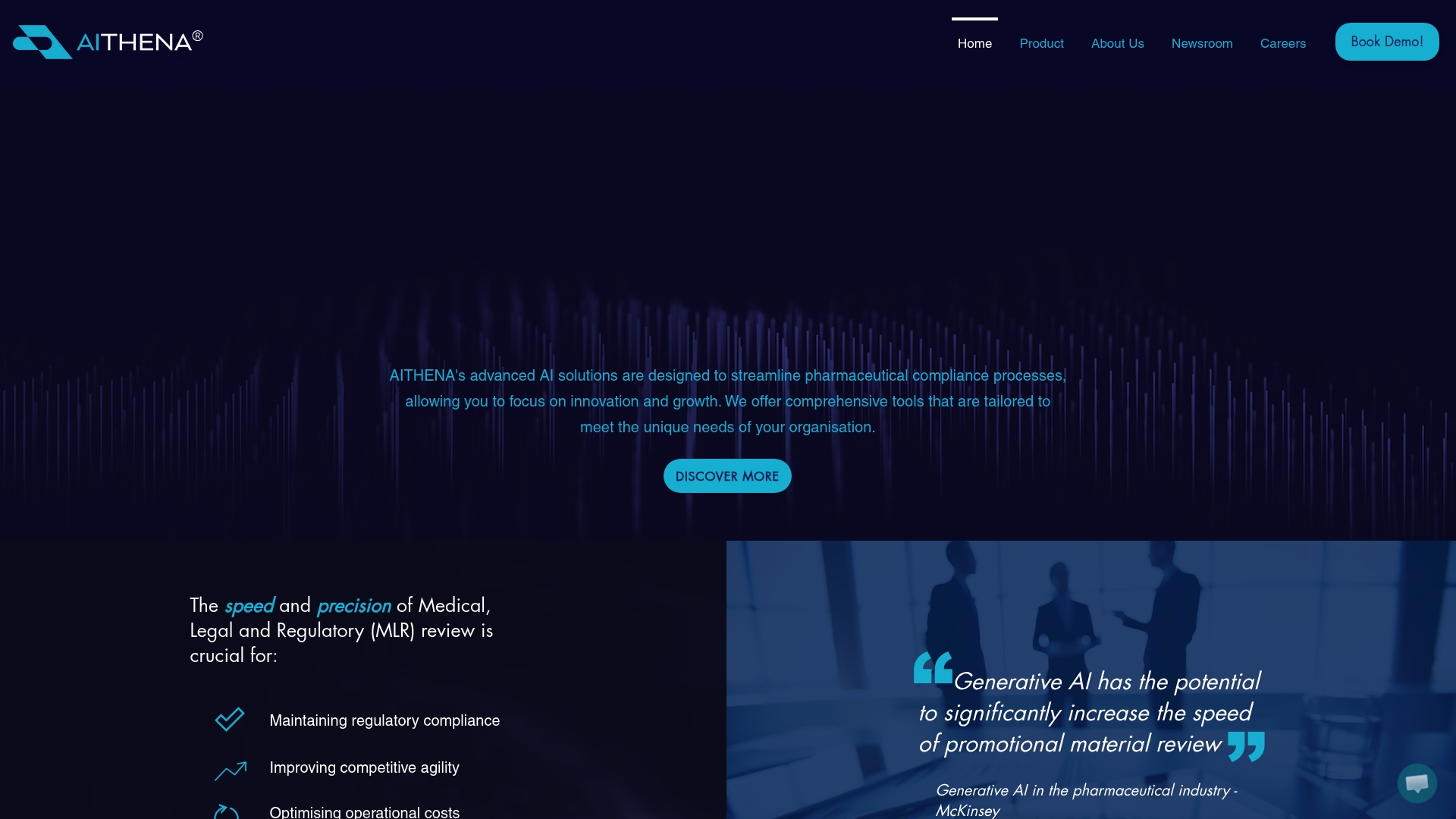
According to the company, MLRcle reviews medical, legal, and regulatory materials in real time and aligns those reviews to the latest UK and EU guidelines. This alignment targets promotional and nonpromotional pharmaceutical content, helping teams spot policy mismatches before publication. The product positions itself for medical affairs, compliance officers, and marketing signatories inside pharma companies.
Core Features
MLRcle delivers a fully automated review engine that checks promotional and regulatory materials against industry codes and company profiles, and it runs reviews in real time to reduce queue times. The platform aims for consistent, objective review quality across legal, medical, and regulatory checkpoints and keeps rule sets aligned to UK and EU guidance. The interface emphasizes privacy and secure handling of sensitive documents.
Key Differentiator
Aithena centers its offering on an automated, real time review engine built specifically for pharmaceutical compliance, which the vendor says maps results to current industry standards and company policies. That focus narrows false positives to policy mismatches rather than generic language flags. The specificity for pharma workflows sets it apart from general content compliance tools.
Pros
According to third party reviews, the automated review flow speeds up approvals and reduces manual effort, which helps teams shorten marketing cycles. The platform claims continuous alignment with evolving UK and EU rules, so compliance teams spend less time updating checklists. Security and privacy are emphasized in the marketing materials, and the product is clearly tailored to medical, legal, and regulatory reviewers inside pharmaceutical organizations.
Cons
-
Depends on high quality training data and company profiles. Incomplete inputs can increase false positives or false negatives.
-
Requires human signoff for high risk claims, so it does not remove the need for expert review.
-
Pricing and integration details are not publicly listed, which complicates budget planning for smaller teams.
-
Vendor materials do not list specific connectors or APIs, so technical fit must be validated during procurement.
Who It’s For
Pharmaceutical companies and medical affairs teams that need a compliance review engine targeted to drug promotion and regulatory communications will find this relevant. Compliance officers and legal reviewers who must handle UK and EU guidance regularly will benefit from the company focus. Marketing signatories who need faster prepublication checks also fit this profile.
Real World Use Case
A Medical Affairs team uses MLRcle to screen a suite of launch materials the week before a campaign goes live. The system flags copy that conflicts with company policy, and the team resolves those items in a single session, cutting approval cycles. That workflow helps the team keep marketing dates without sacrificing regulatory rigor.
Pricing
Pricing information is not publicly available and the vendor lists pricing as not applicable for informational pages. The product appears positioned for enterprise deployments, and commercial quotes are likely customized to deployment scope and support needs. Prospective buyers must request a formal proposal for licensing details.
Website: https://aithena.co.uk
Comparison of alternatives
When evaluating marketing compliance tools, different offerings feature unique strengths relevant for specific fields such as healthcare, finance, or pharmaceutical sectors. To aid in selecting the best fit, consider these key trade-offs and advantages.
Assistance in Multichannel Content Review
ScanCompliant demonstrates an edge in multichannel content compliance by offering a unique integration of AI technology, called Clara AI, that provides context-sensitive rewrite suggestions alongside flagged items. Its fast review times and clear prioritization improve efficiency. In comparison, Hellowarrant supplies in-workflow compliance feedback tailored tightly into creative and approval workflows, which suits organizations seeking to streamline their processes within internal systems. However, its reliance on automated mechanisms may not always address nuanced regulatory requirements.
Integration with Existing Systems
Saifr leads in enterprise integration due to its compatibility with platforms like Microsoft Azure and ServiceNow. These integrations enable efficient incorporation of compliance signals into larger organizational workflows, supporting collaborative approaches. In contrast, ScanCompliant focuses on compliance monitoring and review for diverse content channels but does not mention similar enterprise integration capabilities.
Best fit
- Marketing teams in regulated industries needing fast and detailed redrafting assistance will benefit most from using ScanCompliant.
- Financial companies requiring specialized compliance tools integrated with their enterprise systems will find Saifr advantageous.
- Health or supplement marketing teams seeking AI-assistance tools tied into regulatory compliance workflows will appreciate Hellowarrant.
- Teams in the pharmaceutical industry requiring compliance solutions tailored explicitly for drug and regulatory content should consider Aithena as a leading option.
Our pick
ScanCompliant offers an exemplary solution for marketing teams that require both advanced compliance guidance and rewriting assistance. Through its distinct Clara AI feature, ScanCompliant enables users to address flagged risks with clarity and efficiency. While Saifr excels in enterprise integrations and Aithena targets pharmaceutical compliance needs exclusively, ScanCompliant stands apart for its detailed assistance across diverse content types. However, teams requiring extensive integration with existing operational systems may prefer other alternatives.
Scancompliant offers a holistic feature set catering to compliance needs, including prioritized findings and AI-assisted content rewriting.
| Product | Core Features | Key Differentiator | Best For | Pricing | Notable Limitation |
|---|---|---|---|---|---|
| Scancompliant | Multichannel content scanning and prioritized findings | Clara AI provides proactive compliance | Marketing and regulatory teams | Starts at $79/month | Marketplace listing scanning is coming soon |
| Saifr | AI compliance for marketing and financial services | Custom-trained, finance-specific AI | Financial services compliance teams | Price not published | Requires custom engagement for pricing and setup |
| Hellowarrant | AI compliance pre-checks and regulatory monitoring | Unified audit trail within workflows | Legal and regulatory marketing teams | Price not published | Complexity may require significant onboarding efforts |
| Aithena | Automated reviews aligned with UK/EU regulations | Custom alignment to pharma policies | Pharmaceutical companies | Price not published | Limited integration and data input dependencies |
How Can Telehealth and DTC Wellness Teams Improve Compliance Faster with Noeted.com Alternatives?
Marketing, regulatory, and legal teams in telehealth and direct-to-consumer wellness often face challenges catching subtle FDA and FTC risky claims across multiple content channels. Scancompliant solves this by combining a vast library of over 1,000 risk terms with AI-powered scanning that delivers prioritized findings in minutes. This reduces lengthy review cycles and offers clear explanations with suggested rewrites to correct flagged language before publication.
Use Scancompliant to protect your brand and accelerate approvals while maintaining a documented compliance trail. Visit Scancompliant now to see how teams have shortened content review and prevented regulatory risks. Gain clarity and control by testing content scanning across websites, PDFs, and social posts in one platform.
FAQ
How does Scancompliant support compliance reviews across multiple content channels?
Scancompliant automates the review process for content scattered across websites, PDFs, and social media. The platform scans various channels and generates a prioritized findings report that identifies risks effectively. Users can expect a streamlined compliance review process that leads to quicker approvals.
What is the difference between Scancompliant and Saifr for compliance needs?
Saifr specializes in financial services compliance and targets language and sanctions earlier in the content lifecycle. Scancompliant excels in providing a comprehensive risk library and explanations for flagged language within its workflow, making it ideal for marketing compliance outside finance.
Which platform offers a faster compliance review cycle?
Scancompliant delivers prioritized findings in minutes, significantly minimizing review queuing. This speed helps marketing and regulatory teams finalize their compliance checks effectively.
Can I use Scancompliant if I have a custom keyword library?
Scancompliant allows users to add custom keyword libraries, enhancing the relevance of its risk scanning. This feature supports teams already managing compliance keyword lists, enabling faster identification of language that needs review.
What impact does Clara AI have on the compliance review process in Scancompliant?
Clara AI provides plain English explanations and rewrite suggestions for flagged terms, simplifying the compliance review process. This functionality helps teams understand why certain language is risky and what safer alternatives to use.