
Under FTC standards, “competent and reliable scientific evidence” generally means human clinical testing: well-designed randomized controlled trials plus a defensible body of corroborating studies. Marketers usually need at least one well-controlled trial with a clinically meaningful endpoint, an appropriate sample size, and a duration matched to the health claim. The FTC and FDA are the two agencies whose guidance controls this question, and a platform can help teams flag gaps before a claim goes live.
TL;DR:
- Randomized controlled human clinical trials are the strongest evidence, especially double-blind, placebo-controlled designs, but they must match the marketing claim’s target population and dosage.
- Claims that reference clinical studies, compare to drugs, or target vulnerable groups trigger FTC scrutiny even if the claim appears implied or less direct.
- A comprehensive evidence file must include full study reports, protocols, IRB approvals, raw data access, and an explicit claim-to-study mapping before publication.
- An independent expert review evaluating study design, statistical integrity, and presence of conflicts is crucial to reduce enforcement risk and support claim validity.
- Ongoing post-market surveillance and automatic re-evaluation triggers are necessary to maintain compliance and prevent escalation from modest results or outdated evidence.
Table of Contents
- What FTC’s CARSE Standard Covers and When It Applies
- Which Study Types Actually Count as Evidence
- The Study-Design Details Regulators Actually Scrutinize
- Reading a Body of Evidence, Not Just One Study
- Building a Pre-Publish Substantiation File
- Why Independent Expert Review Matters More Than Internal Sign-Off
- The Workflow: From Claim Draft to Publication
- How Compliance Teams Actually Reduce Enforcement Risk
- Sources
What FTC’s CARSE Standard Covers and When It Applies
CARSE, the acronym regulatory teams use for “competent and reliable scientific evidence,” isn’t a vague aspiration. The FTC defines it as tests, analyses, research, or studies conducted and evaluated objectively by persons qualified to do so, using procedures generally accepted in the profession to yield accurate and reliable results. That definition comes straight from the FTC’s Health Products Compliance Guidance, and it applies to far more than pills in bottles.
The standard covers any product where a health benefit or safety claim shows up in marketing, including dietary supplements, functional foods, over-the-counter devices, and telehealth service claims about outcomes. It applies whether the claim is express (“clinically proven to reduce joint pain”) or implied (a before-and-after photo paired with suggestive copy). Marketers often assume implied claims carry less risk. They don’t. The FTC treats an implied claim exactly like an express one if a reasonable consumer would take away the same message.
Here’s where it gets genuinely confusing for in-house teams: FDA and FTC jurisdiction overlaps but isn’t identical. FDA generally polices product labeling, ingredient safety, and whether a supplement claim crosses into unapproved drug-claim territory. FTC polices advertising, meaning everything from your website copy to a paid social post to an affiliate’s landing page. A claim can be technically compliant with FDA’s labeling rules and still trigger an FTC enforcement action if the advertising around it isn’t backed by adequate evidence. Legal teams who only run claims past FDA’s structure/function framework are missing half the exposure.
A few practical markers that a claim triggers full CARSE scrutiny:
- The claim states or implies the product treats, cures, prevents, or reduces risk of a disease or symptom.
- The claim references clinical studies, doctors, or “proven” results, even loosely.
- The claim compares the product’s effect to a known drug or medical intervention.
- The claim targets a vulnerable population (chronic illness, weight management, mental health).
- The product category has a documented history of FTC enforcement, such as weight loss, cognitive enhancement, or immune support.
FTC training materials and case law consistently emphasize the same three elements: objectivity, qualified evaluators, and generally accepted procedures. Miss any one of the three and the evidence is vulnerable, no matter how favorable the results look on paper. That’s also the framework some AI scanning engines use when flagging a claim for missing substantiation context.
Which Study Types Actually Count as Evidence
Not all research carries the same weight, and the FTC has been consistent about the hierarchy for years. Randomized controlled human clinical trials sit at the top because randomization controls for confounding variables and blinding controls for bias, which together let you attribute an outcome to the product rather than to chance or expectation.
Ranked from strongest to weakest for CARSE purposes:
- Randomized controlled human clinical trials (RCTs). Gold standard for cause-and-effect claims, especially double-blind, placebo-controlled designs.
- Non-randomized intervention studies. Useful supporting evidence, but confounders weaken causal claims.
- Well-conducted observational studies. Can show correlation and generate hypotheses, rarely enough alone for a strong health claim.
- Mechanistic or animal studies. Explain biological plausibility but don’t substantiate human outcomes on their own.
- Testimonials and anecdotal reports. Carry essentially no weight and can actually increase enforcement risk if presented as proof.
The FDA’s guidance on dietary supplement substantiation echoes this ranking, noting that randomized, double-blind, placebo-controlled trials are the gold standard while still directing reviewers to weigh the entire body of evidence rather than any single study in isolation.
Statistic to remember: a 2026 analysis of independent reanalyses found that 74% reached the same qualitative conclusion as the original social and behavioral science studies, but only 34% matched the original quantitative estimates within a narrow tolerance. Translation for compliance teams: a study can hold up directionally while the actual effect size regulators would expect from your marketing claim doesn’t survive a second look.
Peer review adds credibility because it subjects methodology to outside scrutiny before publication, but it isn’t a substitution for study design quality. A peer-reviewed study with a 15-person sample and no control group is still a weak piece of evidence. And ingredient-level research is a persistent trap: a clinical trial on an isolated compound at a specific dose doesn’t automatically substantiate a claim about your finished product, especially if your formulation, dose, or delivery method differs.
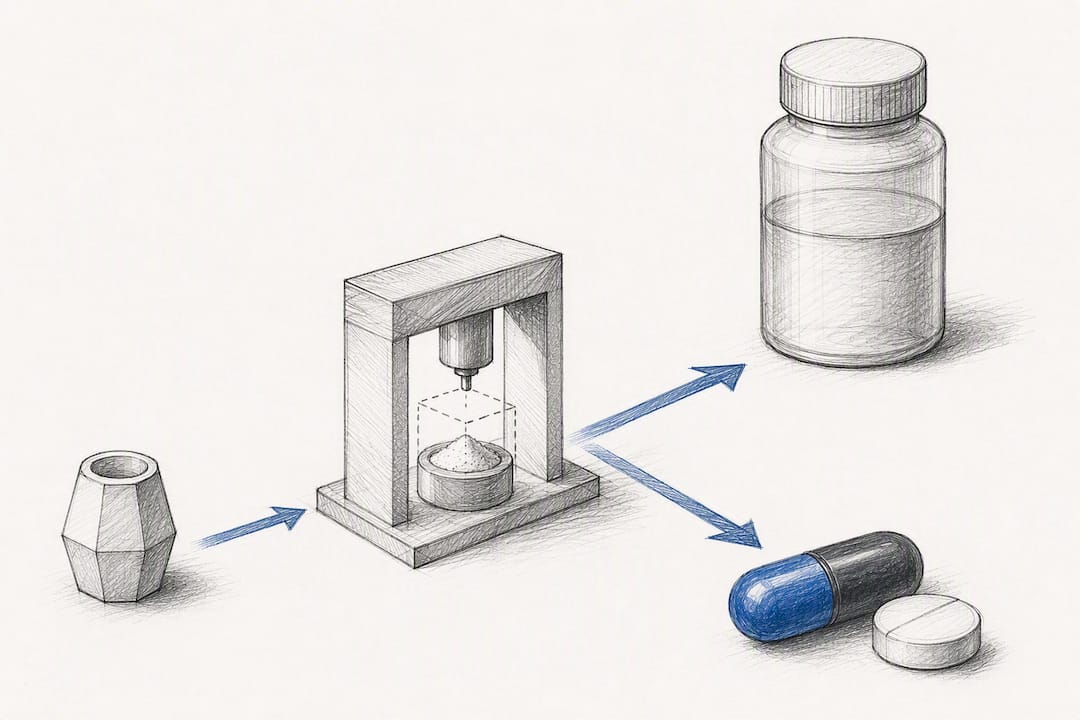
The Study-Design Details Regulators Actually Scrutinize
Regulators don’t evaluate a study’s conclusion in isolation. They pull apart the design itself, and several parameters come up in nearly every enforcement action involving weak substantiation.
- Sample size and statistical power. A study needs enough participants to detect a real effect if one exists. Underpowered trials with small participant numbers depending on the expected effect size, produce results that look promising but don’t hold up to scrutiny.
- Clinically meaningful endpoints. The outcome measured has to match what the marketing claim promises. A study measuring a biomarker change isn’t equivalent to a study measuring symptom relief unless there’s an established, accepted link between the two.
- Randomization and blinding. Random assignment to treatment or control groups removes selection bias. Blinding, ideally double-blind, removes both participant and researcher expectation effects.
- Placebo or active control. Without a comparison group, you can’t isolate the product’s effect from natural variation, seasonal change, or the placebo effect itself.
- Pre-specified hypotheses and statistical analysis plans. Studies that lock in their primary endpoint and analysis method before collecting data are far more credible than ones where researchers went looking for whatever result turned out significant.
- Handling of missing data and dropouts. High dropout rates without a documented intention-to-treat analysis can quietly bias results toward the product.
- Relevance to the marketed product. Same formulation, same dose, same route of administration, same target population as what you’re actually selling. Extrapolating from a different dose or a different population is one of the most common ways otherwise solid evidence collapses under review.
FTC guidance specifically calls out mismatches between study population and marketed population, along with short study duration and inappropriate outcome measures, as common reasons substantiation gets rejected.
Pro Tip: Before you greenlight a claim based on an existing study, map every design parameter above against the exact language in your marketing copy. If a single parameter doesn’t line up, either soften the claim or commission new research. Don’t assume close enough counts.
Reading a Body of Evidence, Not Just One Study
A single study, no matter how well designed, rarely settles the question. The FTC and FDA both expect you to weigh the entire body of evidence, and that means understanding three concepts: consistency, replication, and external validity.
Consistency asks whether multiple independent studies point in the same direction. Replication asks whether an independently conducted study, ideally by a different research team, corroborates the original finding. FTC guidance treats replication as adding disproportionate weight to a substantiation file, more than a second study from the same lab using the same protocol would.
External validity asks whether the study population, dosing, and conditions resemble real-world use of your product. A trial conducted on athletes in their twenties doesn’t tell you much about how a supplement performs in a 55-year-old population, even if the biology theoretically transfers.
When studies conflict, the instinct is often to cite the favorable one and ignore the rest. That’s a mistake regulators catch quickly. A more defensible approach:
- Identify what varies between the conflicting studies: dose, duration, population, outcome measure, or methodology.
- Determine whether the conflict has a plausible explanation, such as a dose-response relationship that only appears above a certain threshold.
- Weight studies by design quality first, not by whether they support your claim.
- Document your reasoning in writing, because “we considered the negative study and here’s why we still believe the claim is supportable” is a materially stronger legal position than silence.
Systematic reviews and meta-analyses can strengthen substantiation when they pool comparable, well-designed trials, but pooling weak studies just produces a more confident-sounding weak conclusion. A trustworthiness framework built around accountability, bias control, and whether the evidence actually warrants the claim being made offers a useful lens here: it pushes you to ask not just “does a meta-analysis exist” but “does the underlying evidence actually support what we’re claiming.”
Building a Pre-Publish Substantiation File
Every claim you publish should have a paper trail that exists before the claim goes live, not one you assemble after a demand letter arrives. Regulators and litigators both look for the same core documents.
- Full study reports, not just abstracts or summary slides from a study sponsor.
- Study protocols and statistical analysis plans, ideally registered or dated before data collection began.
- IRB or ethics committee approvals for any human trial.
- Raw data access statements confirming who can verify the underlying numbers if challenged.
- CRO or research partner contracts documenting who conducted the study and any funding relationships.
- Independent expert review memos addressing whether the evidence supports the specific claim as worded.
- A written mapping document that ties each individual claim in your marketing to the specific study or studies backing it.
That mapping document is the piece most teams skip, and it’s the piece regulators ask for first. Map each claim to the criterion it’s meant to satisfy: is this study establishing clinical relevance, independence of the research team, adequate sample size, or something else? A documentation playbook built around FDA and FTC criteria can turn this from a scramble into a repeatable process.
Pro Tip: Retain your substantiation file for at least as long as the claim remains live, plus several years after, since FTC actions can reach back to marketing published years earlier. Treat your evidence file the way you’d treat tax records, not the way you’d treat a marketing brief you’ll never open again.
Why Independent Expert Review Matters More Than Internal Sign-Off
An internal marketing or regulatory team reviewing its own evidence has an obvious blind spot: incentive. Independent third-party experts don’t carry that bias, and FTC guidance specifically recommends bringing them in to assess whether the studies you’re relying on actually support the claims you want to make.
The expertise you need depends on the claim. A cognitive-function claim needs someone with clinical trial experience in that therapeutic area. A claim resting heavily on statistical comparisons needs a biostatistician who can evaluate whether the analysis plan and sample size were adequate. A claim spanning multiple studies benefits from a methodologist who can assess consistency and study quality across the set.
A useful expert review produces four deliverables:
- A written opinion mapping each specific claim to the evidence that supports it.
- An independent assessment of study design and statistical integrity.
- A disclosure of any financial or professional relationship between the expert and the sponsor.
- Suggested qualifying language for any claim where the evidence has gaps.
Document independence explicitly. If the expert has consulted for your company before, disclose it in the file rather than letting it surface during an investigation. Conflicts of interest don’t automatically disqualify an expert opinion, but undisclosed ones destroy its credibility instantly.
The Workflow: From Claim Draft to Publication
Substantiation only works as a system if it has stage gates, not a one-time review that happens whenever someone remembers to ask legal.
- Claim drafting. Marketing writes the claim language, ideally with regulatory input at the drafting stage rather than after copy is finalized.
- Evidence mapping. Regulatory affairs matches each claim to specific studies and flags gaps immediately.
- Expert review. An independent scientific reviewer evaluates whether the mapped evidence actually supports the claim as worded.
- Legal signoff. Legal counsel confirms the claim, evidence file, and any required qualifying language meet the risk tolerance the company has set.
- Publication. The claim goes live across whatever channels are planned, with the evidence file archived and linked to the specific asset.
- Post-market surveillance. Someone monitors for new contradicting research, adverse event reports, or competitor enforcement actions in the same product category.
Each stage needs a named owner. Marketing owns drafting and channel execution. Regulatory affairs owns evidence mapping and gap identification. Clinical operations, where a company has in-house scientific staff, owns coordinating any new research needed to close gaps. Legal owns final signoff and risk tolerance decisions.
Certain events should automatically trigger re-evaluation of a live claim: publication of a new study contradicting your evidence, an adverse event report tied to the product, or an FTC or FDA enforcement action against a competitor making a similar claim. Waiting for a formal complaint before revisiting a claim is how a small documentation gap turns into a six-figure settlement. A structured pre-publish playbook built around these gates gives teams a repeatable process instead of a fire drill every time legal asks a question.
How Compliance Teams Actually Reduce Enforcement Risk
The failures we see most often aren’t exotic. They’re overclaiming from a modest result, and extrapolating an ingredient study to a finished-product claim without checking whether the dose or formulation even matches. Both mistakes come from the same root cause: nobody built a system that forces the claim and the evidence to be checked against each other before publication.
Automation doesn’t replace expert judgment, but it does the thing humans are bad at, which is catching the fortieth instance of risky phrasing buried in a blog post nobody reread carefully. Pairing an automated first pass with an independent expert review gets teams to publication faster without lowering the bar on substantiation.
For multi-channel marketing teams, the governance fix is boring but effective: one evidence file per claim, one named owner for the mapping document, and a trigger list for when a claim needs re-review. Teams that skip this usually don’t realize the gap exists until an investigation forces them to reconstruct it under pressure.
— Compliant Team
Sources
Save the FTC’s Health Products Compliance Guidance and FDA’s dietary supplement substantiation guidance as your primary references; both define the standards enforcement actions get measured against. Science centralizes federally funded research when you need to locate studies behind a specific ingredient claim. For understanding how analytic choices affect confidence in results, the 2026 robustness study on reanalyses explains why pre-specified analysis plans matter so much to regulators evaluating your evidence file.
Getting a compliant claim to market fast without cutting corners on substantiation is exactly the gap Scancompliant was built to close, scanning marketing content against FDA and FTC risk patterns before anything publishes, with a documented trail your legal team can point to if questions ever come up later.
This article is general information, not a substitute for advice from a qualified doctor. Consult a qualified healthcare professional about your own circumstances before acting on anything here.
- Health Products Compliance Guidance | Federal Trade Commission
- Guidance for Industry: Substantiation for Dietary Supplement Claims Made Under Section 403®(6) of the Federal Food, Drug, and Cosmetic Act | FDA
- Investigating the analytical robustness of the social and behavioural sciences | Nature
- A framework for assessing the trustworthiness of scientific research findings