
Editing health content regulatory compliance is the process of refining medical and health communications to meet FDA, FTC, and industry standards while preserving clinical accuracy. Every piece of health content your team publishes carries legal weight. A single unsubstantiated claim, an anonymous byline, or a missing disclaimer can trigger an FDA warning letter, a Google ranking penalty, or both. This article gives compliance teams and health content creators a practical framework for meeting regulatory requirements, integrating AI drafts safely, and building editorial workflows that hold up under scrutiny.
What are the essential regulatory requirements for editing health content?
Health content compliance standards are not optional guidelines. They are enforceable rules backed by federal agencies, search engine quality systems, and professional publishing bodies. Three frameworks govern most of what your editing team needs to know.
FDA advertising rules apply to all digital health content, including blog posts, social media, and sponsored articles. FDA enforcement in 2025–2026 increasingly targets digital channels, including influencer promotion and sponsored content, for misleading claims. That shift means your editorial checklist must treat a sponsored Instagram post with the same rigor as a product label.
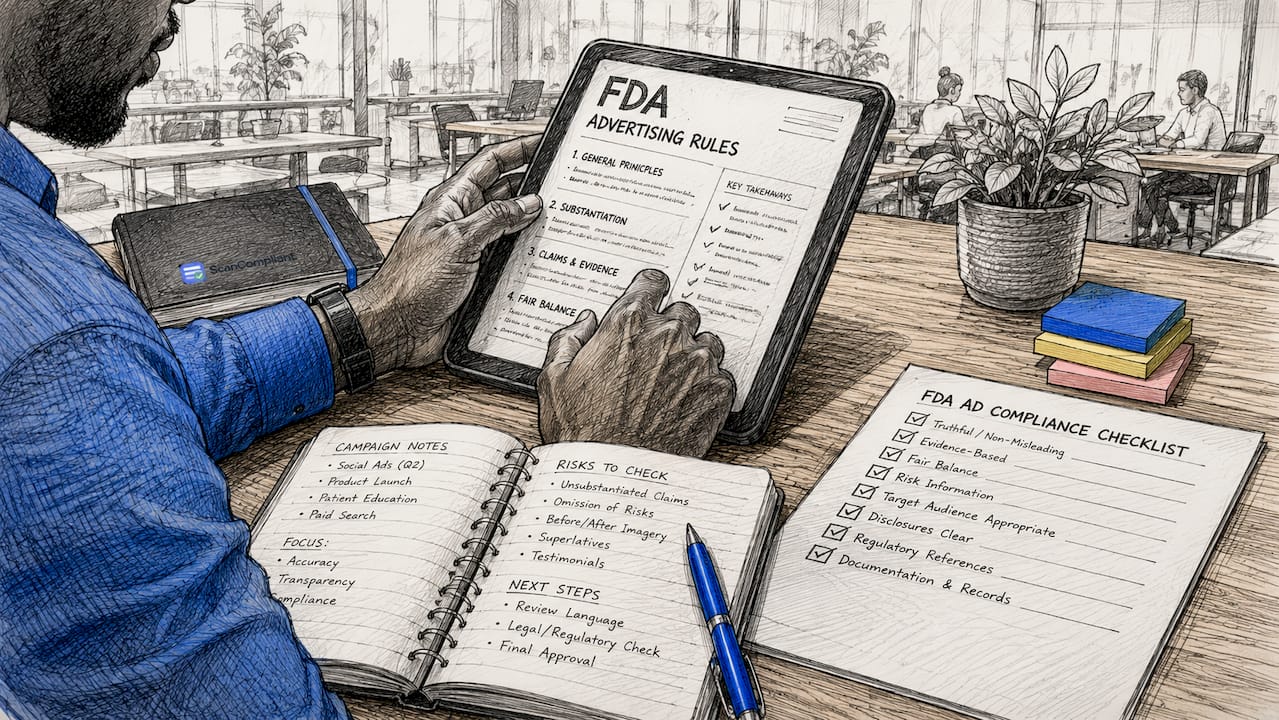
Google’s YMYL (Your Money or Your Life) framework adds a second layer of accountability. YMYL standards require every health content piece to carry a named, credentialed author and a clearly visible medical disclaimer near the top. Anonymous health content gets flagged, which reduces both visibility and ranking potential. That is a business problem, not just a compliance problem.
Good Publication Practice (GPP) 2022 governs biomedical communications specifically. GPP 2022 guidelines require disclosure of all professional medical writers and editors involved in a publication. Authors retain ultimate responsibility for content, and disclosure improves transparency across the board.
The table below summarizes the core requirements from each framework.
| Framework | Core requirement | Applies to |
|---|---|---|
| FDA advertising rules | No unsubstantiated claims; fair balance required | Promotional and DTC health content |
| Google YMYL | Named author with credentials; visible disclaimer | All public-facing health web content |
| GPP 2022 | Disclose medical writers and editors | Biomedical and research publications |
| FTC guidelines | Clear disclosure of paid relationships | Sponsored content and influencer posts |
Beyond these frameworks, every published health article needs a visible last-review date. Silent content overwrites are noncompliant and increase regulatory risk. A minimum 12-month review cycle with visible correction notes for substantive updates is the accepted standard.
How to integrate AI drafts safely into the health content editing process
AI-generated health content is subject to the same regulatory standards as human-created content. There is no separate compliance lane for machine-generated copy. That fact alone changes how your team should think about AI tools.
The most common mistake is treating AI output as finished copy. AI drafts frequently contain confident-sounding claims with no citation, paraphrased statistics that have drifted from the original source, and language that crosses from educational into promotional without flagging it. Each of those errors creates regulatory exposure.
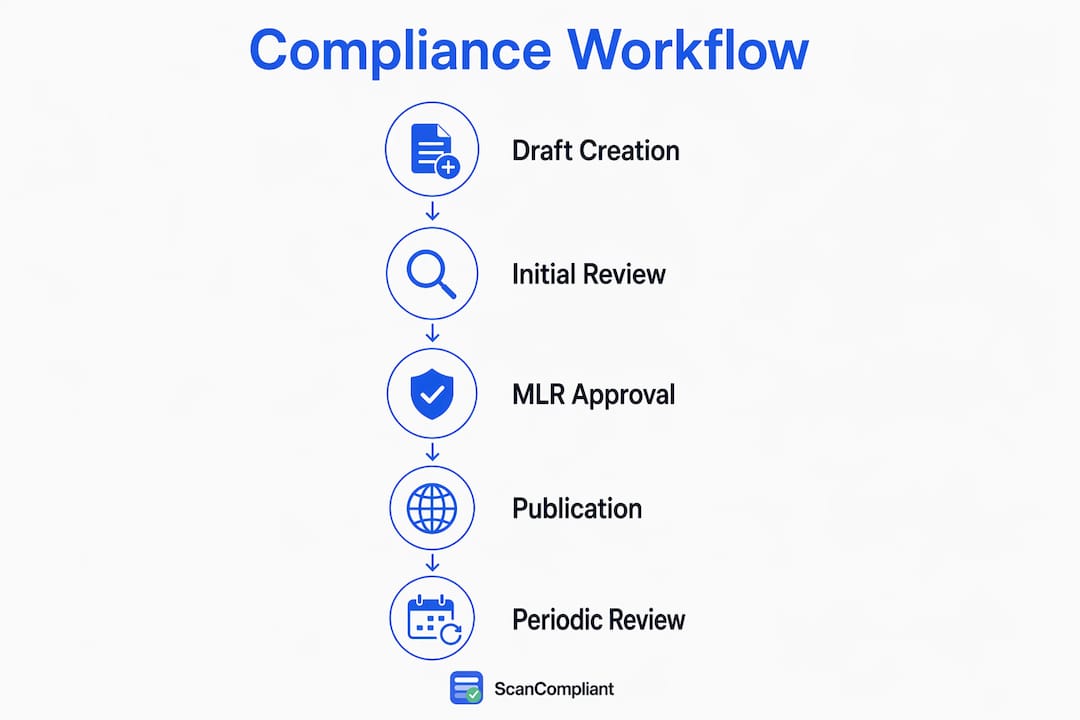
Effective teams integrate AI into their Medical, Legal, Regulatory (MLR) workflow and define clear policies around AI content use. That means AI tools function as drafting aids, not as standalone content creators. The human MLR review catches what the machine misses.
A sound AI content governance policy covers four areas:
- Scope: Define which content types may use AI drafts (blog posts, patient FAQs, email copy) and which may not (clinical trial summaries, prescribing information).
- Disclosure: Decide whether AI involvement requires disclosure and document that decision.
- Review triggers: Require a full MLR review for any AI-generated content making a health claim, referencing a drug or device, or targeting a patient population.
- Audit trail: Log the AI tool used, the prompt, the draft version, and every subsequent edit with timestamps.
MLR workflows must maintain explicit audit trails documenting who approved each content version and when. That documentation is your defense in an enforcement action.
Pro Tip: Use AI tools built for regulated industries rather than general-purpose writing assistants. General tools have no awareness of FDA claim categories or FTC disclosure requirements. Specialized platforms flag risk terms before content reaches the MLR queue.
What practical steps should editors and compliance teams follow for health content review?
A structured review workflow removes ambiguity about who owns each stage of the process. Clear division of MLR roles produces faster approvals and fewer compliance gaps. The steps below reflect current best practices for health editing.
- Draft and self-review. The content creator submits a draft with all claims cited to peer-reviewed sources or recognized clinical guidelines. No draft enters the MLR queue without citations attached.
- Medical review. A credentialed clinician or medical affairs reviewer checks clinical accuracy, terminology, and claim substantiation. Queries replace edits wherever clinical meaning is ambiguous.
- Legal review. Legal counsel checks for liability exposure, off-label implications, and FTC disclosure compliance.
- Regulatory review. The regulatory reviewer applies FDA advertising rules, checks fair balance, and confirms that risk disclosures appear with appropriate prominence.
- Editorial final check. The editor confirms authorship credentials are visible, the disclaimer is near the top, the last-review date is present, and all citations link to live, reputable sources.
- Approval and publication. The final approved version is logged with approver names, credentials, and timestamps before going live.
Authorship verification deserves its own step. Named clinical authors or reviewers must hold verifiable professional credentials visible in the byline or review statement. A job title alone does not satisfy this requirement. License numbers, institutional affiliations, or board certifications should appear in the author bio or a linked credentials page.
Claim substantiation follows a clear hierarchy. Peer-reviewed journal articles rank above clinical guidelines, which rank above professional society statements, which rank above expert opinion. Content that cites only press releases or brand-owned research carries a higher compliance risk.
The table below maps workflow stages to the responsible reviewer and key compliance check.
| Stage | Responsible party | Key compliance check |
|---|---|---|
| Draft submission | Content creator | Claims cited to peer-reviewed sources |
| Medical review | Credentialed clinician | Clinical accuracy and terminology |
| Legal review | Legal counsel | Liability, off-label risk, FTC disclosures |
| Regulatory review | Regulatory affairs | FDA fair balance, risk disclosure prominence |
| Editorial final check | Senior editor | Authorship, disclaimer, last-review date |
What are common compliance pitfalls in health content editing?
Most regulatory failures in health content trace back to a short list of recurring errors. Knowing them by name makes them easier to catch before publication.
- Anonymous or uncredentialed authorship. Generic bylines like “Editorial Team” or “Health Staff” fail YMYL and GPP standards. Every piece needs a named, credentialed reviewer in the byline or review statement.
- Unsubstantiated claims. Phrases like “clinically proven,” “the most effective,” or “guaranteed results” require clinical evidence. Publishing them without citation is an FDA enforcement target.
- Missing risk disclosures. Promotional content for drugs, devices, or supplements must present risks with the same prominence as benefits. Burying a risk disclosure in a footnote does not satisfy fair balance requirements.
- Over-simplification that alters medical meaning. Medical editors improve legal defensibility by standardizing terminology without changing clinical meaning. Replacing a precise clinical term with a simpler word can introduce ambiguity that creates liability.
- No audit trail. Without documented approval records, a brand cannot demonstrate compliance in an enforcement review. This gap is both a regulatory failure and a legal vulnerability.
“Queries should be documented and ambiguity avoided to maintain legal defensibility.” Editing technical health content requires querying rather than replacing precise clinical terms. That discipline protects both the author and the organization.
The healthcare marketing compliance training your team receives directly affects how many of these errors reach the MLR queue. Teams with structured training catch more issues at the draft stage, which shortens review cycles and reduces rework.
Key takeaways
Editing health content for regulatory compliance requires structured MLR review, named credentialed authorship, claim substantiation, and documented audit trails at every stage of the publishing process.
| Point | Details |
|---|---|
| Apply three core frameworks | FDA rules, Google YMYL, and GPP 2022 each impose distinct requirements on health content editing. |
| Treat AI drafts as starting points | All AI-generated health content requires full MLR review before publication. |
| Verify authorship credentials | Named authors with verifiable credentials must appear in every published health piece. |
| Document every approval | Audit trails with approver names and timestamps are required for regulatory defense. |
| Review content on a set cycle | A minimum 12-month review cycle with visible correction notes keeps published content compliant. |
The compliance culture problem no one talks about
The compliance teams I work with most often do not fail because they lack knowledge of FDA rules or YMYL standards. They fail because their editorial culture treats compliance as a final gate rather than a continuous practice. By the time a piece reaches the regulatory reviewer, the content creator has already invested hours in a draft built on shaky claim foundations. The reviewer then faces a choice between a costly rewrite and a risky approval. Neither outcome is good.
The fix is not a better checklist. It is a shift in where compliance thinking enters the process. When content creators understand what makes a claim substantiatable before they write the first sentence, the MLR queue gets shorter and the approval rate goes up. That requires investing in training and in tools that surface risk early, not at the end.
The other underrated factor is terminology discipline. Editing technical health content requires querying rather than replacing precise clinical terms. A well-meaning editor who swaps “myocardial infarction” for “heart attack” in a clinical summary may introduce a meaning gap that creates legal exposure. Precision is not pedantry. It is protection.
Technology helps, but only when it sits inside a governed process. An AI scanning tool that flags risk terms before a draft enters the MLR queue saves time and catches subtle language that human reviewers miss under deadline pressure. The tool does not replace the reviewer. It makes the reviewer’s job faster and more defensible.
— Compliant Team
How Scancompliant supports health content compliance teams
Health content teams managing high-volume publishing cycles need more than a checklist. They need a system that catches risky language before it reaches the MLR queue.
Scancompliant is an AI-powered content scanning platform built for telehealth and direct-to-consumer health brands. It scans content against a database of over 1,000 risk terms, identifies problematic claims, and delivers prioritized findings in minutes. The platform has already protected more than 200 brands and creates a documented compliance trail for every review cycle. For teams managing marketing compliance workflows, Scancompliant reduces review time and gives regulatory reviewers a cleaner starting point. You can also explore the compliance sign-off process guide to see how audit trail governance fits into a full MLR workflow.
FAQ
What is editing health content regulatory compliance?
Editing health content regulatory compliance is the process of reviewing and refining medical and health communications to meet FDA, FTC, YMYL, and GPP standards before publication. It covers claim substantiation, authorship disclosure, risk disclosures, and audit trail documentation.
Does AI-generated health content need the same compliance review as human-written content?
Yes. AI-generated health content is subject to the same regulatory standards as human-created content, with no separate compliance lane. Every AI draft requires full MLR review before publication.
What authorship standards apply to published health content?
Named clinical authors or reviewers must hold verifiable professional credentials visible in the byline or review statement. Anonymous or generic authorship fails both YMYL and GPP 2022 requirements.
How often should published health content be reviewed for compliance?
Health content requires a minimum 12-month review cycle. Substantive updates must include visible correction notes. Silent overwrites are noncompliant and increase regulatory risk.
What is an MLR workflow in health content editing?
An MLR (Medical, Legal, Regulatory) workflow is a structured review process in which credentialed medical reviewers, legal counsel, and regulatory affairs specialists each check health content before publication. Audit trails documenting approver names and timestamps are a required part of the process.